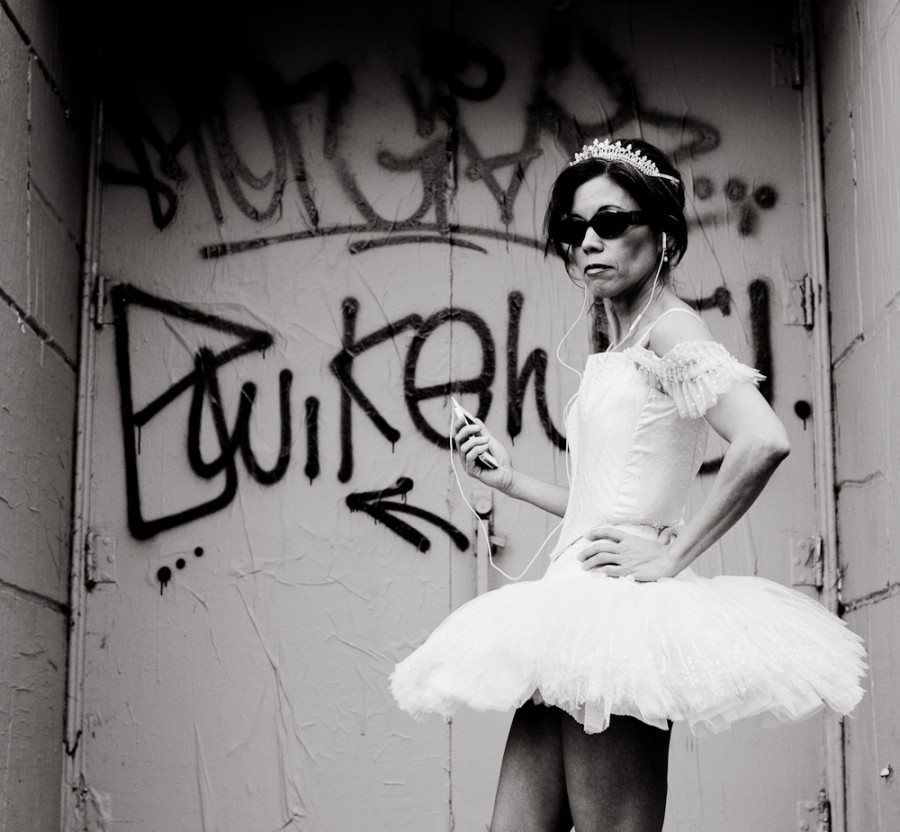
Dance companies worldwide – but above all in the U.S. – have taken a hard hit since the last recession. Large or small, no company has escaped the economic hammering. Some, like Ballet Florida, have collapsed under a mountain of debt. Some, like New York City Ballet, have had to lay off dancers. Many have had to make deep programming cuts, and some have had their dirty laundry publicly aired in their battle to stay afloat – most notable in recent months has been the scandal at Ballet San Jose (riveting details here.)
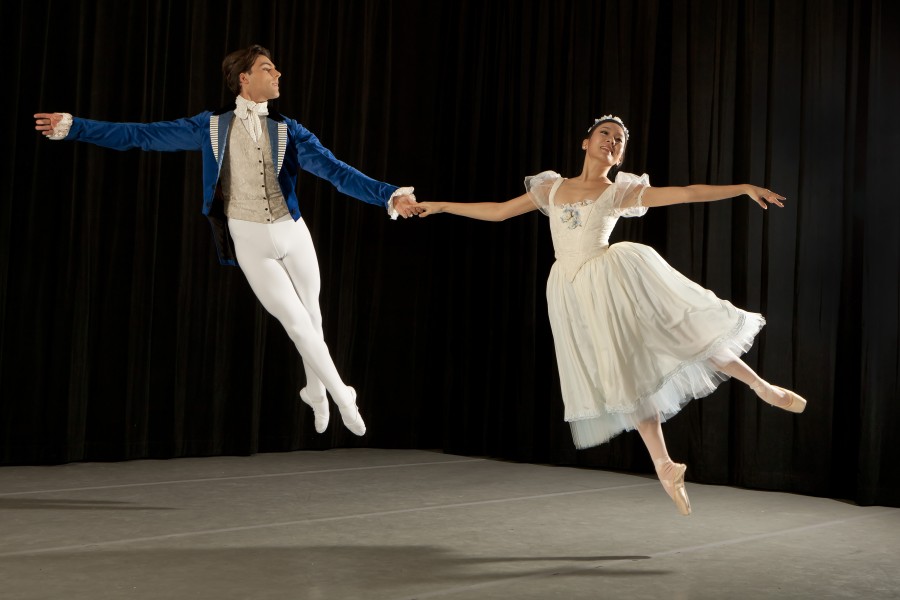
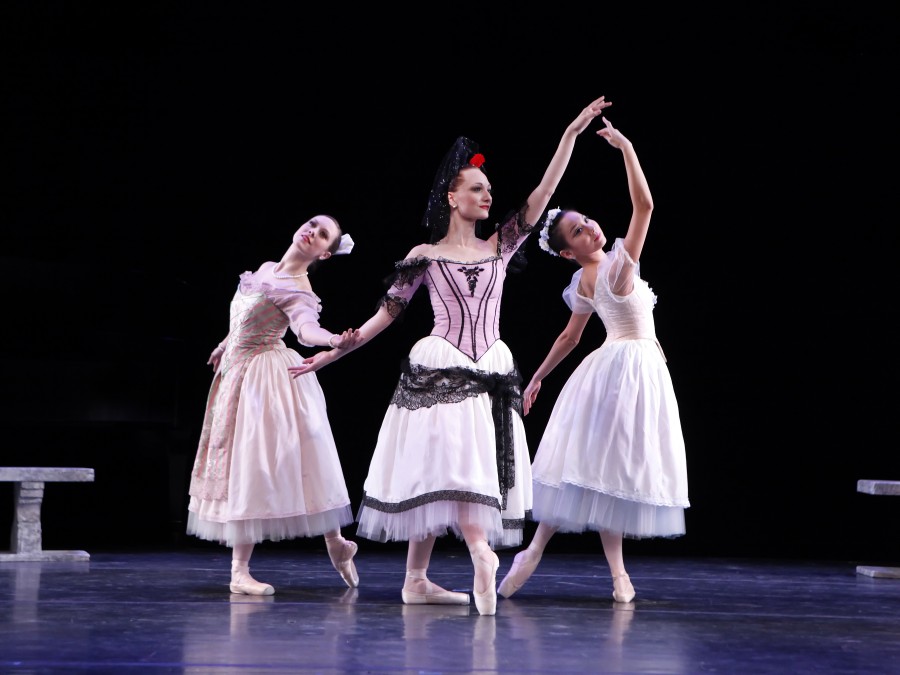
Emitting a fiery sparkle amid the general gloom is New York Theatre Ballet, which for over 30 years has served up invigorati ng revivals of rarely seen classics, as well as imaginative new commissions, in a wide range of styles – heroic for a troupe of only 13 dancers operating on a shoestring budget in the world’s most expensive city for dance. Hailed by critics, including the famously grouchy Alastair Macaulay, as “a treasure,” the company offers not only a rare and invaluable window into the evolution of modern ballet, but also commits to making dance broadly accessible by keeping ticket prices affordable (under $30!), and stages witty and engaging storybook ballets by choreographers who create sophisticated productions that appeal equally to audiences young and old (see NYTB’s current production of Sleeping Beauty).
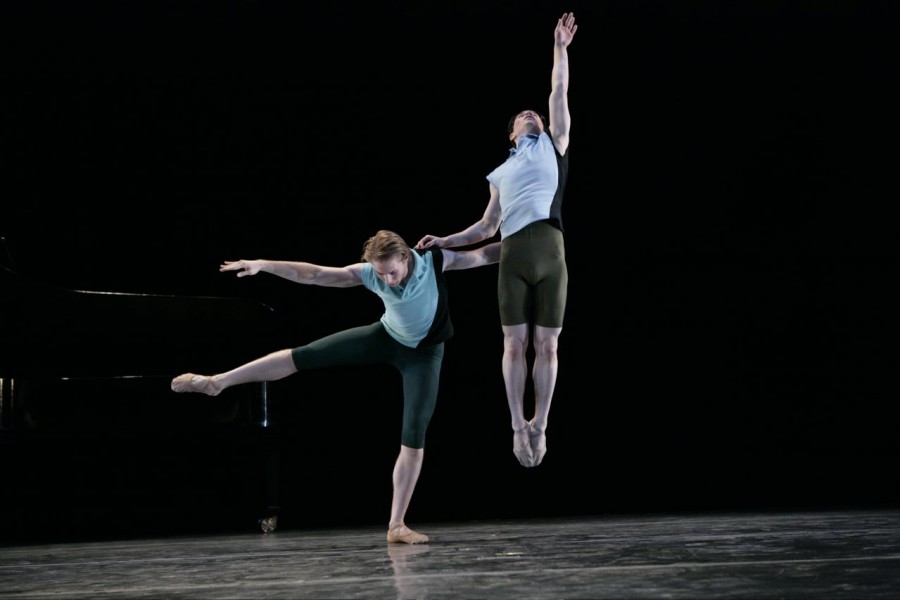
NYTB’s inspired programming has paired early Frederick Ashton with Antony Tudor’s haunting Jardin aux Lilas, José Limón with Agnes de Mille’s riotous Three Virgins and a Devil, and the stunning world premiere of Richard Alston’s A Rugged Flourish with early Merce Cunningham. Founder and Artistic Director Diana Byer also promotes the exciting new work of young, up-and-coming choreographers (see NYTB’s current ‘Signatures’ program).
Byer notes that the company has been fortunate to have had the “extraordinary talents” of Sylvia Nolan, Resident Costume Designer of the Metropolitan Opera House and set designer, Gillian Bradshaw Smith on all of their productions since the company began. The dancers have been impeccably trained by Byer herself, who was a student and protégé of Antony Tudor, and by Margaret Craske (from Diaghilev’s Ballets Russes, trained by Enrico Cecchetti) and Sallie Wilson who served as Ballet Mistresses.
“Because NYTB tours to small venues across the USA, with many audience members having little or no live theater experience we try to present ballets which are accessible to a wide range of tastes,” Byer emphasizes. “We work very hard to keep our production costs down without sacrificing quality. This keeps our ticket prices at a very affordable price point. We also fill a niche. Our chamber ballets can be performed almost anywhere. We don’t need a huge stage or lots of tech time. We can go into any community anywhere in the country and bring full productions regardless of stage size. Sets are built for touring and can be adjusted to most stages, large and small.”
“Finding repertory for a chamber company is never an easy task. Fortunately David Vaughan, a member of NYTB’s Advisory Board, author of Frederick Ashton and His Ballets and Merce Cunningham: 50 Years, has always been there to push me in the right direction. And he’s never been wrong. It was David who suggested Cunningham’s Septet, Ashton’s Capriol Suite, Tudor’s Soirée Musicale and James Waring’s Phantom of the Opera and An Eccentric Beauty: Revisited. David has even suggested contemporary choreographers to me. I would never have discovered the work of Richard Alston without David suggesting I see his company when they were performing at the Joyce. And when I find a ballet I’m interested in, I can always run the idea by him. Planned for 2013 are new choreographies by Gemma Bond and Richard Alston.”
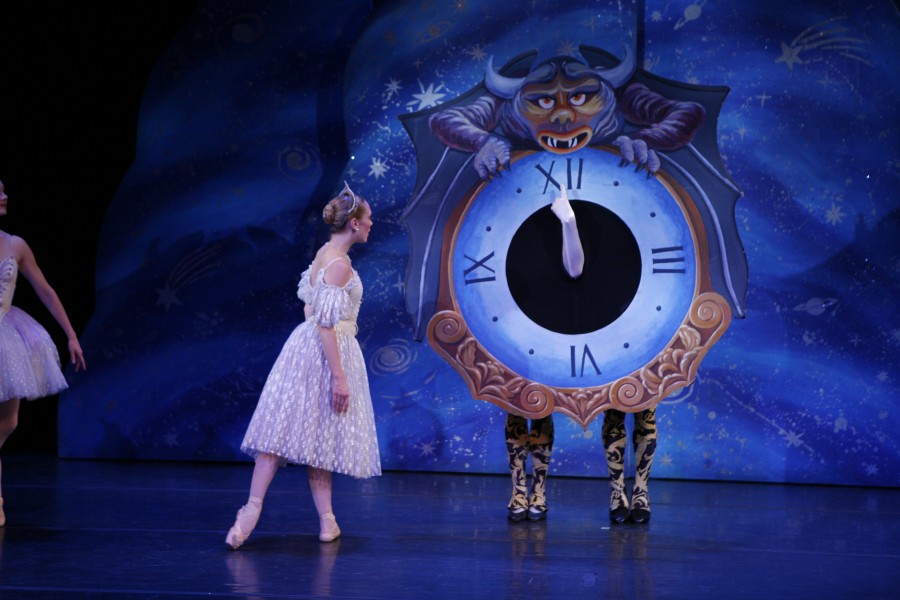
On the other hand, “finding ballets for Once Upon a Ballet has been somewhat easier.” The idea for one-hour ballets to introduce inner-city kids to theatre and dance came from Kermit Love, the original costume designer for Fancy Free and Rodeo, and the creator of Big Bird and Mr. Snuffleupagus for Sesame Street. Love was a member of NYTB’s first board. The concept has grown into a four-ballet series every year – including Cinderella, Sleeping Beauty, Nutcracker, The Alice-In Wonderland Follies, Mother GOOSE!, Carnival of the Animals – perfect ballets to spark a child’s imagination. Since the beginning, all costumes have been designed by Sylvia Nolan from the Metropolitan Opera. Byer notes that “because dance encompasses so many other art forms – music, literature, design and movement – each generation can take something different away from each production. Our new ballets for 2013 will be Peter and the Wolf, sharing the bill with another new ballet, Bark in the Park, a new story with original music by Karen LeFrak. Both ballets will be conceived and choreographed by Liza Gennaro.”
There have been challenges: “From an artistic standpoint,” Byer notes, “we have had to forgo presenting certain ballets we’ve had our hearts set on, because we simply can’t afford to mount them, despite our best fundraising efforts. Administratively, we’ve operated with a small skeleton staff for many years. Every person on staff does the work of 3 people… In this competitive and growing field we must have a fully staffed office, and funds to continually mount new revivals and take risks in identifying and presenting the work of young, emerging choreographers.”
The recession aside, Ballet to the People believes the business model for dance companies in the U.S. is profoundly flawed. The current economic crisis appears only to be deepening a chronic, widespread mess that has existed ever since the Joffrey Ballet’s bitter split with patron Rebekah Harkness in 1964. A mess that will eventually engulf even the better-run companies like NYTB.
American dance companies are forced to manage themselves as commercial businesses and abandon artistically adventurous programs that don’t pack in the audiences. Many companies, like Ballet San Jose, become dependent on one deep-pocketed donor and cannot extricate themselves when the relationship turns corrosive; most professionally run companies try to avoid this but in a tight-money era they don’t have much choice.
The establishment of the National Endowment for the Arts in 1965 introduced a new wave of public funding for dance companies but nearly half a century later government support for dance companies remains inconsequential. The 2012 budget for the NEA has recently been slashed to $146 million. (More on the gradual suffocation of the NEA )
Compare this to the budget for the National Arts Council in Britain, which after a drastic 15% cut still stands at £300 million ($475 million) or about $8 per capita vs. the U.S.’s miserly 50¢.
And Italy, where the government’s Fondo Unico per lo Spettacolo (Sole Fund for Performance) stands at a historic low of €398 million ($530 million) or $9 per capita.
Last November, Germany’s Culture Minister Bernd Neumann announced a 5.1% increase in state ‘investment’ in the arts. ‘Subsidy’, he said, belonged to the past. This was a stake in the nation’s future.
Immediately upon which the EU announced a €1.8 billion ($2.4 billion) funding programme for arts and culture, starting in 2014, marking a 35% increase in EU support for ailing cultural industries – on top of what EU member governments have already committed.
Though Europe is in deeper economic crisis than the U.S., the arts remain a key priority. Consequently, European dance companies have always had great freedom to experiment, to introduce provocative new work, to pay dancers a living wage, and to keep ticket prices low, because their funding source is much more stable and not subject to the whims and fortunes of individual donors or corporations.
Public funding is premised on the notion that art is a public good that must be supported by the state if it is to exist at all, and if it is to be any good.
Europeans understand that in dire economic times, performing arts serve an even more critical function than in times of prosperity. Europeans aren’t the only ones who’ve figured this out: Venezuela has made a massive investment in El Sistema, a network of orchestras which targets social change through classical music education for nearly half a million of the nation’s underprivileged children. Venezuelans don’t think this is a “nice to have” but an absolute “must have”, not a cultural policy but a highly targeted national security strategy to keep disadvantaged, at-risk youth off the streets and out of the correctional system. El Sistema gives them a sense of what discipline and dedication to a higher ideal can achieve. Its most famous graduate to date, 31-year-old Gustavo Dudamel, is a rock star both in his home country and in America, where he directs the Los Angeles Philharmonic.
Gustavo Dudamel takes the Los Angeles Philharmonic to Venezuela
In America, where the prison population has tripled in 20 years, with one out of every 99 adults currently behind bars, and the costs of incarceration estimated at $74 billion in 2011 (read the Pew Center report on trends in America’s prison population), clearly not enough policy-makers are thinking about arts education as a solution.
New York Theatre Ballet, once again boxing way above its weight class, is attempting to do something about this with its innovative outreach program called LIFT, targeted at New York City’s at-risk youth. (click here to watch LIFT in action)
As you weigh your choices in the upcoming elections, ask your candidates these hard questions:
- Do they understand the critical role that arts play in fighting crime, and in bolstering America’s image abroad?
- Will they publicly fund a LIFT program for every dance company in America?
(And if you want to know where these much-needed public funds should come from, read my earlier post on stealth fighter jets.)


Leave a Reply