Leigh Donlan reported from San Jose’s Center for the Performing Arts:
After a three week tour of Spain, the Silicon Valley Ballet came home to San Jose for a weekend of performances, a program which included a company première and which closed with Ohad Naharin’s powerful Minus 16.

Finnish choreographer Jorma Elo’s Glow-Stop adorned the dancers with red velvet costumes and golden lighting (by Zach Brown and Brad Fields, respectively) as they moved with an incessant urgency to Mozart’s Symphony No.28, the women leaping precariously into their partner’s lifts, followed by reluctant low drags. Once the score transitioned to Philip Glass’ Tirol Concerto, their bodies appeared grateful for the slower, more manageable choreography. Yet absent live music, their connection to the score was mechanical and uninspired. Thankfully, soloist Akira Takahashi’s robust musical instincts brought some life to the sections that he was in.
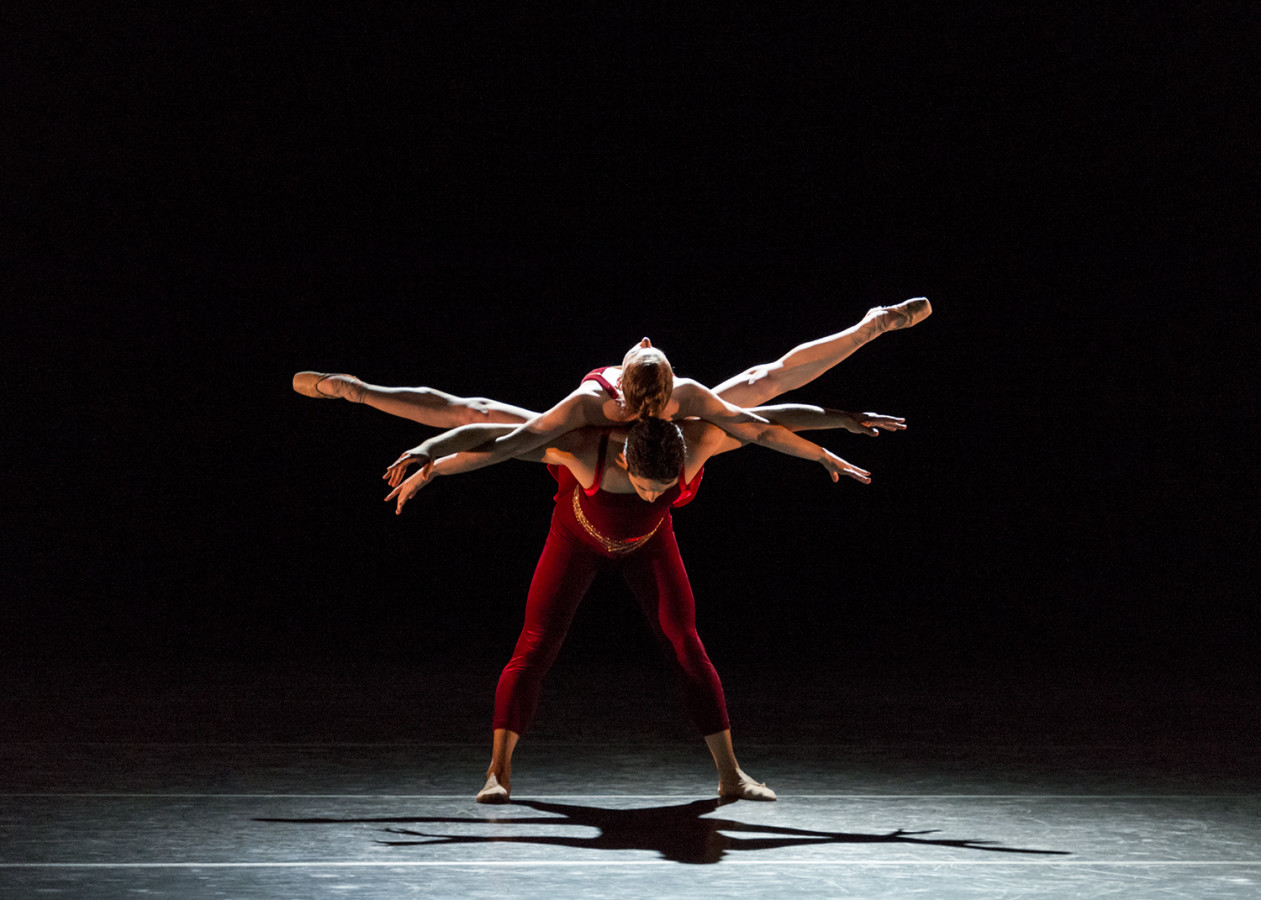
Where recorded music did work was in Prism, choreographed by Colombian-Belgian-born Annabelle Lopez Ochoa. This 30-minute work did justice to Keith Jarrett’s astonishing Köln Concert, recorded live in Germany in 1975. Mirroring the hypnotic and seductive solo-piano improvisation, the dancers eased in and out of multi-layered moods. Jarrett’s grunts, moans and exhalations were perfectly synced with a contraction, an extension or a release from the moving bodies, and the original Clifton Taylor lighting – re-imagined by David K. H. Elliott – bespoke a prism of colors refracted through water. Ommi Pipit-Suksun was mesmerizing in a pas de deux with Rudy Candia, her lithe body owning each jarred musical note with a sumptuous hunger – a true pleasure to watch.
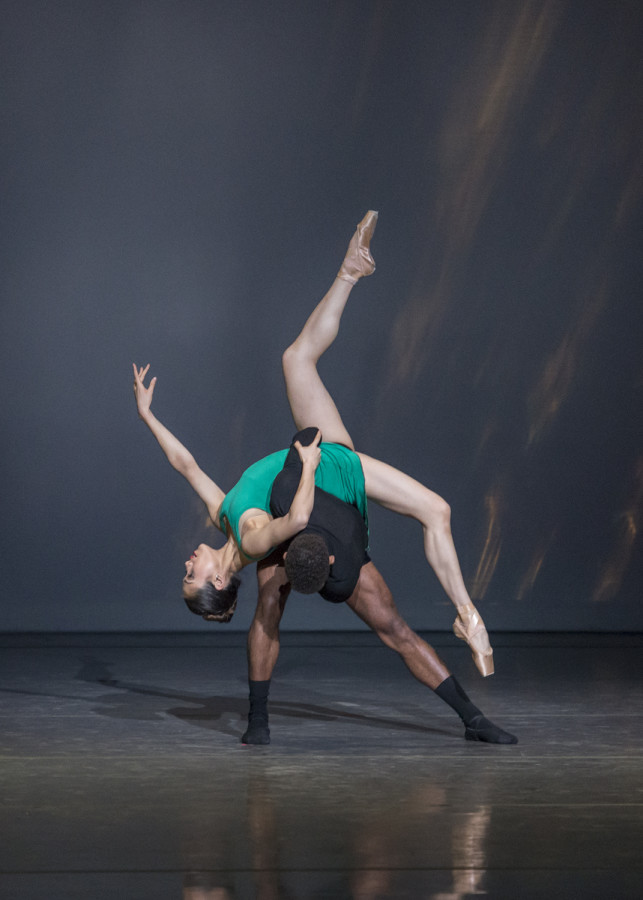
(Photo: Alejandro Gomez)
But the showstopper was Minus 16 by Ohad Naharin, the Israeli artistic director of the Batsheva Dance Company. Using a combination of improvisation and Naharin’s “Gaga” technique (which emphasizes the exploration of each person’s individuality through movement) the work requires such an extreme range of movement from dancers that it ought to be required repertoire for any major dance company.
Francisco Preciado was irresistible as he took the stage during intermission with jazz improv set to a crooning Dean Martin. As dancers settled into a semicircle of chairs, we hear the words, “The illusion of beauty and the fine line that separates madness from sanity, the panic behind the laughter and the coexistence of fatigue and elegance.” Then the traditional Hebrew song of “Echad Mi Yodea” (Who knows One?) commences, followed by 13 rounds of Gaga chair dancing and a shouted chorus of “She ba-shamaim u va-aretz” (“Who is in the heaven and the earth?”) while the dancers gradually disrobe from suits to their undies.
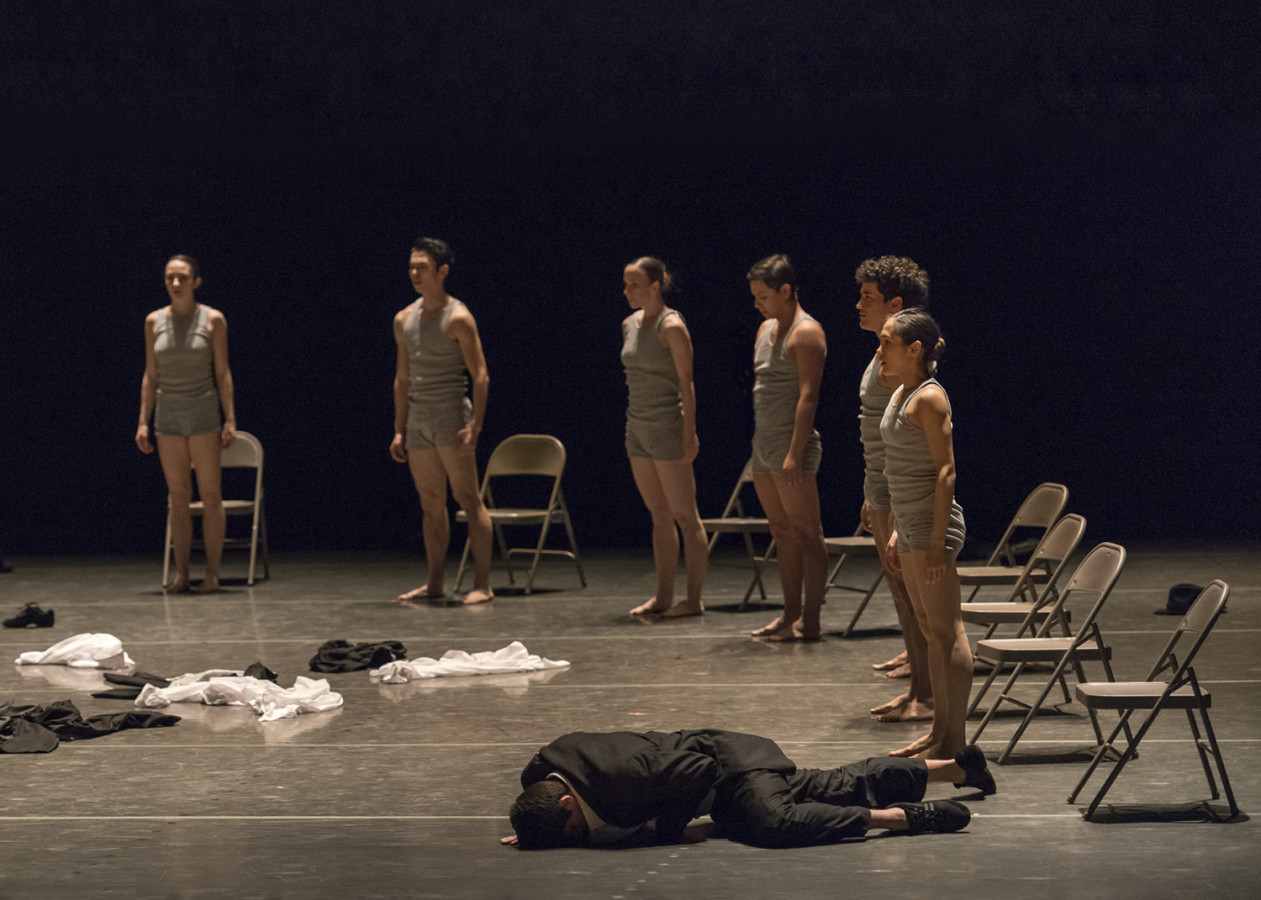
(Photo: Alejandro Gomez)
Full of surprises, the piece comprised unconnected scenes drawn from different Naharin works. A later scene called for some audience participation, as dancers brought members onstage for a variety of complex dances, including the mambo – a highlight that sent many patrons home smiling. During their multiple standing ovation curtain calls, most of the dancers continued to go Gaga, lapping up this newfound freedom of expression.
Carreno’s dynamic choices of international repertoire are producing remarkably well-rounded performers. The only questionable program element was the uneventful opener, Diana and Actaeon. This brief Petipa classic pas de deux was an unnecessary sleeper that could not be rescued by a solid presentation from principals Junna Ige and Maykel Solas; the unflattering costumes and lighting simply made matters worse. Fortunately, Ige’s unflinching technical precision and Solas’ masterful partnering were evidence enough of why this is a world class ballet company.
– Director’s Choice runs through Sunday, Feb 21. See the company website for details. –


Leave a Reply to ballettothepeople Cancel reply