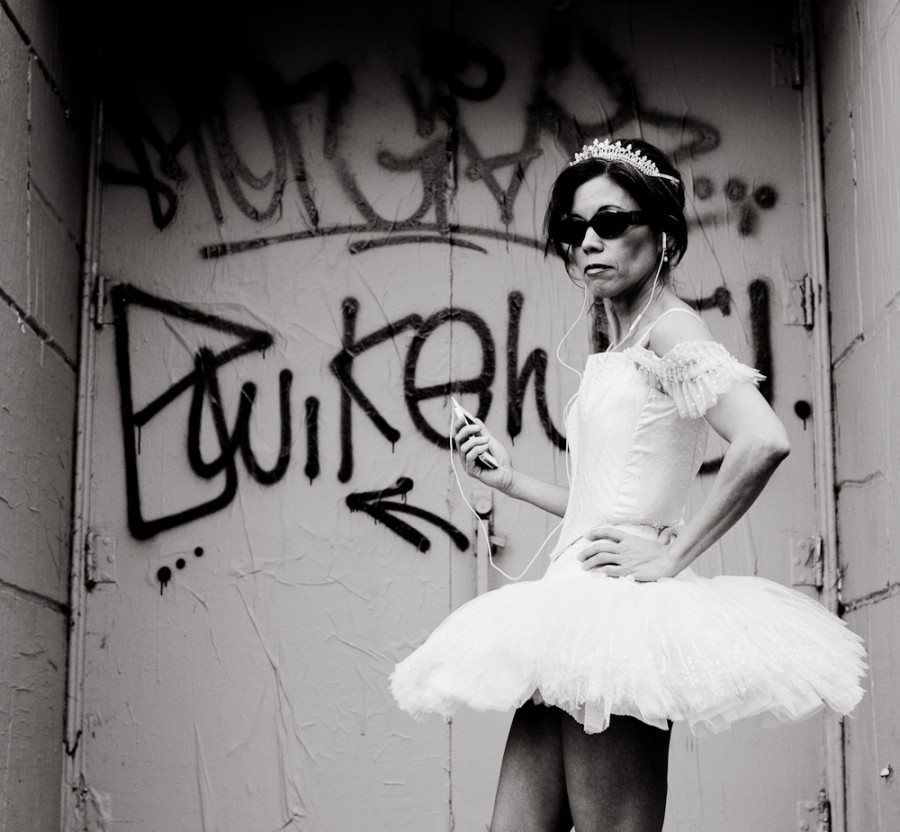
Leigh Donlan reviews the book by Gavin Larsen and Gene Schiavone
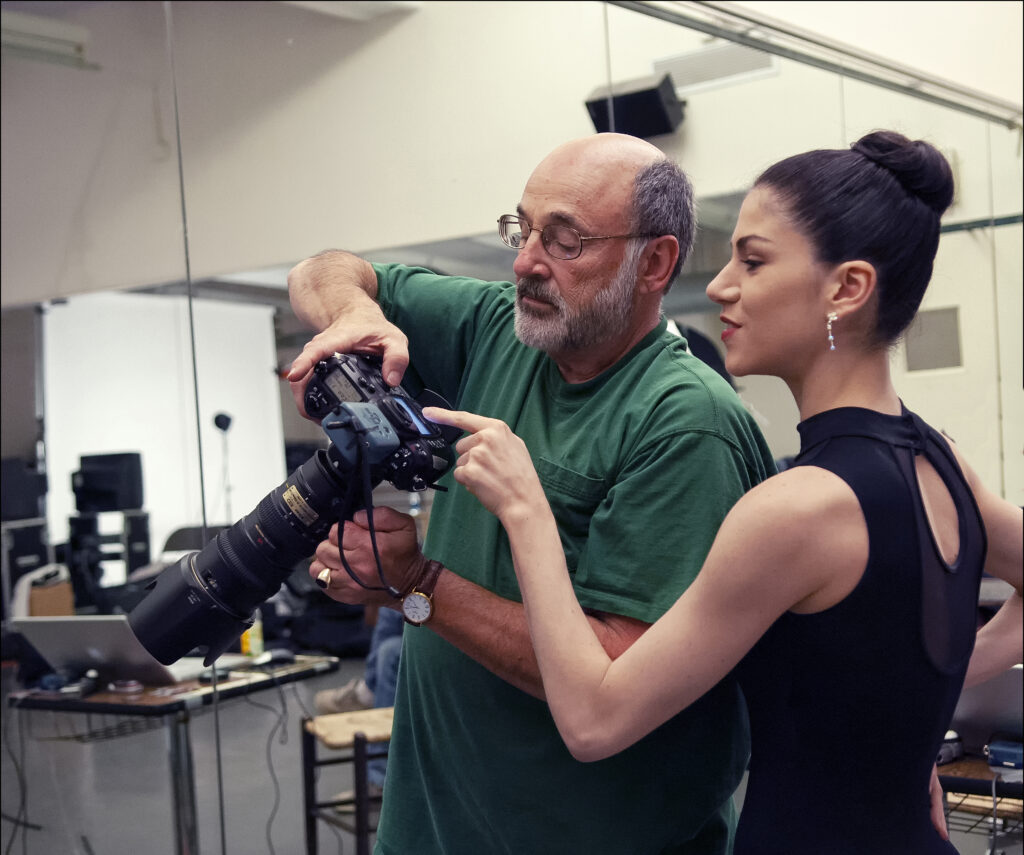
In the compelling new book Infinite Steps, writer and former dancer Gavin Larsen profiles thirty-three dancers, intertwining their stories with the ethereal imagery of photographer Gene Schiavone.
A diverse group of artists – from world-renowned stars to fresh faces – are revealed in these 183 pages, sharing their experiences of navigating the professional industry. Weaving together stories from both ascending and enduring careers, the book exposes the vocational trials and stark realities of the ballet industry. It also offers hard-earned pearls of wisdom from such industry stalwarts as Susan Jaffe, Misty Copeland, Alina Cojocaru, Cory Stearns and Herman Cornejo.
The life of a professional ballet dancer is never easy, regardless of the advantages one might be blessed with: be it a natural physical facility, a supportive family, abundant financial resources, or proper mentorship. Despite these opportunities, many dancers still question if the path is right for them or find themselves crumbling under the pressure. In this career, time is a fleeting luxury; the art remains tethered to a physical body that must eventually yield, whether to the sudden silence of injury or the steady hand of time.
Despite six years with the Sarasota Ballet, Jacob Hughes felt a persistent sense of inadequacy. A forced hiatus following an ankle injury prompted a period of reflection and a pivot to the world of musical theater, starting with a Copenhagen production of The Phantom of the Opera. This transition finally illuminated the roots of his discontent; in the theater, he discovered a newfound creative liberation, trading the repetition of traditional dance roles for the freedom to experiment with his characters.
There are also those who never doubted their vocation, like Alina Cojocaru, whose intelligence and boldness leap off the pages. Cojocaru bravely chose to leave her principal position at the Kyiv Ballet for a corps de ballet spot at London’s Royal Ballet, enticed by the company’s expansive repertoire, where she quickly rose to principal rank.
While preparing for La Sylphide, she was coached by Sorella Englund, who profoundly influenced her artistry and approach to roles. Cojocaru recalls, “Sorella would come into the studio and say, ‘How is your forest today? Is it sunny, rainy, in bloom? Can you smell the rain?’ And I thought, ‘Oh my gosh, my forest can be anything I envision.’ The coaches I connect with more will teach me more. I will be able to dance with all my senses open.”
Paloma Herrera never doubted her career choice, becoming a principal dancer at ABT when she was just 19 years old. “She wants to pass on her trademark conviction that beyond technique and hard work is consistency,” Larsen writes, adding “You have to show up, for yourself and for the art.”
“That was my secret, I guess,” Herrera says. “I never missed a class, I never missed a rehearsal. I was the first one to the theater and the last one to leave. But it was because I loved it. It was my passion.”
Many of the younger dancers profiled, not yet principals, are focused on climbing company ranks, while many of the seasoned principals find themselves looking back, wishing they had savored the moments more. Herman Cornejo reflects, “When I was in my twenties and thirties, I took time for granted… Now I look back and think… wow, look what I’ve accomplished, but how stressed I was in getting there.”
He notes that the true reward lies in the process rather than the result: “The beauty is in the work we do to produce a show, but the show itself is not the final achievement. It goes beyond.” Later, he adds, “I feel better physically now than I ever did. I have peace of mind instead of always pushing, wanting, thinking ‘what’s next?’… I go day by day… I’m enjoying the moment.”
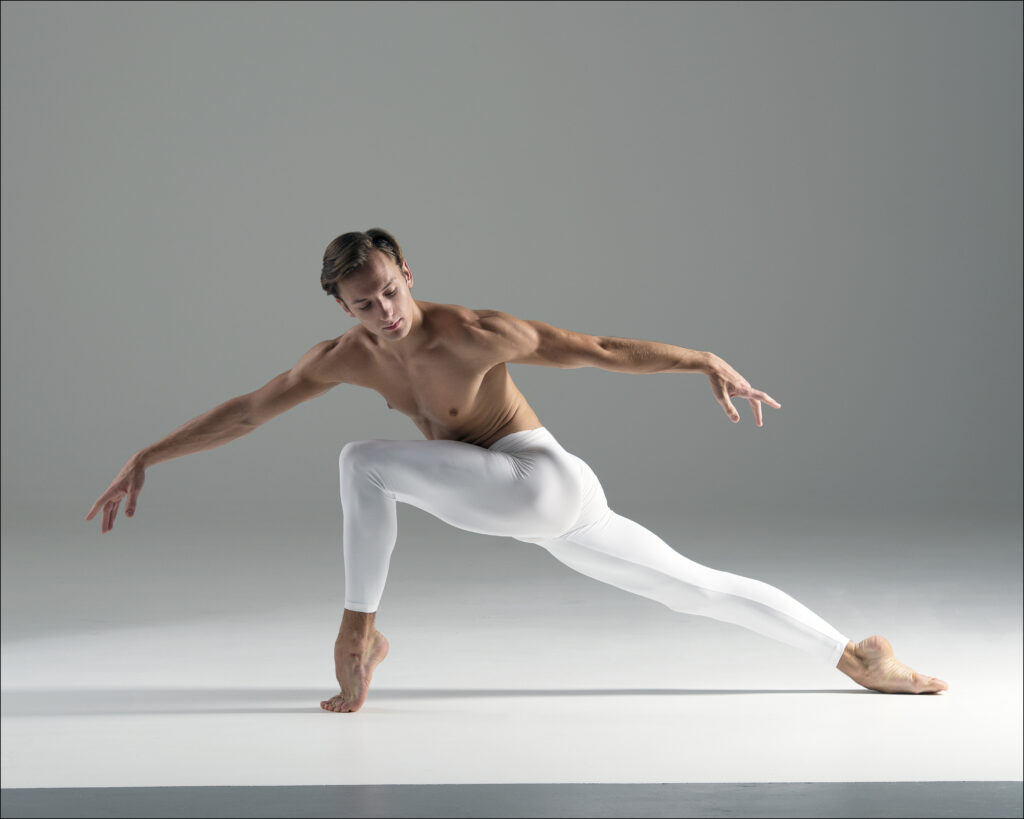
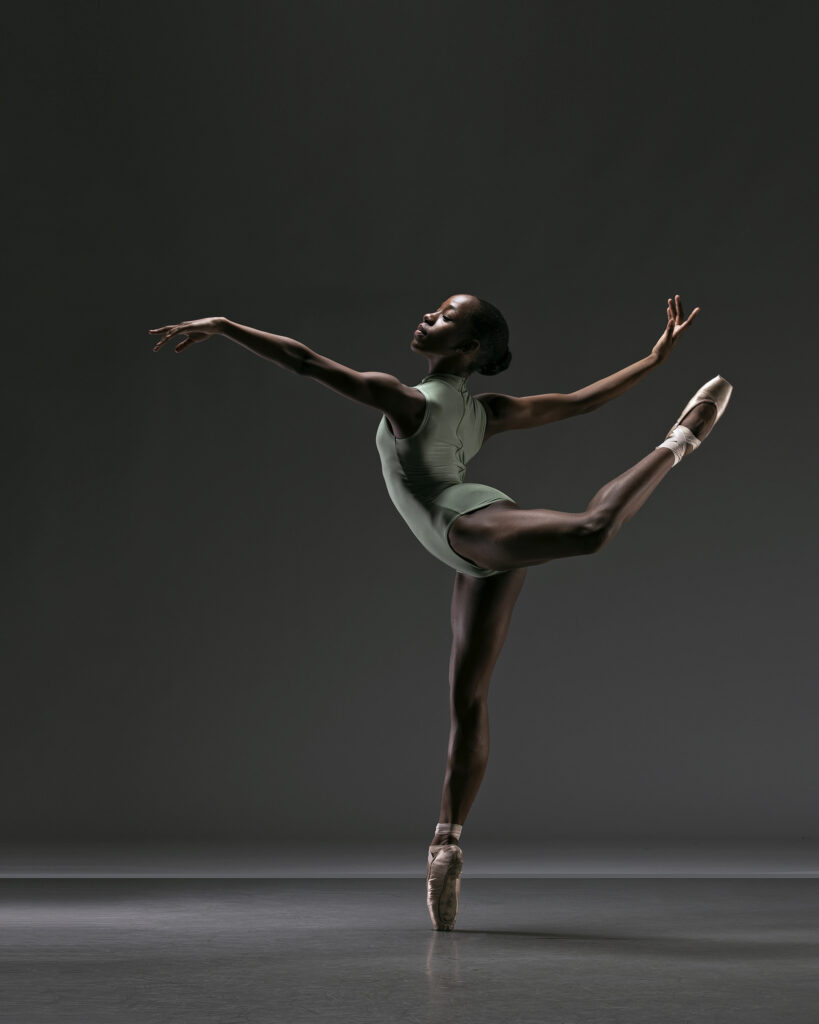
Schiavone’s photography has immortalized these fleeting moments, capturing glimpses that would otherwise be lost to time.
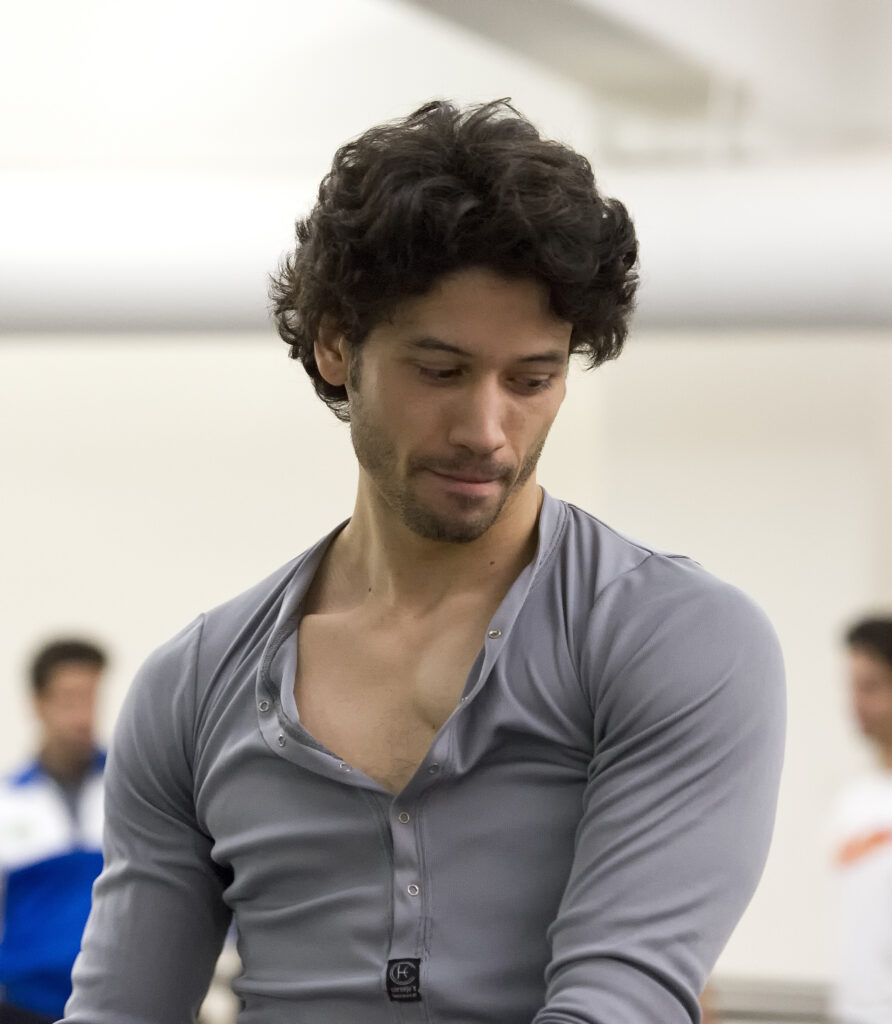
Cory Stearns offered some insights into youthful vulnerabilities. As an ABT principal dancer set to retire this summer, Stearns reflects on the changes he has witnessed during his 26 years with the company. “He’s seen ABT’s evolution,” Larsen writes, “from a place with entrenched patterns that tended to stifle dancers’ ambition to one where the norms are openness, communication, and sincere support among the dancers.”
Stearns adds, “When I was younger, I said to myself that when I was a senior dancer, if I saw things like what I went through, I would not let it slide – I would correct it. But I have to say that I’ve not seen any circumstances where I’d need to do that, because the company culture seemed to just naturally shift.” He partially credits the next generation of dancers for driving this change.
Everyday issues of the discipline are addressed; from injuries to the monotony of daily class, to nutrition and holistic practices. Personal insights into how race, class, and mental health have influenced the development of generations of dancers deepen the discussion.
Reflecting on the imperative of racial equity and the need to elevate every dancer’s voice, Misty Copeland — the first Black female principal dancer at ABT — remarked to Larsen that the journey toward inclusion remains far from complete. “We have so much more work to do,” she acknowledged, “but to me, it’s not about how long it takes. It’s the fact that people are paying attention in a real, genuine way.” For Copeland, the strength of the art form lies in its evolution into a true collective, where the harmony of unique individualities creates an even more powerful whole.
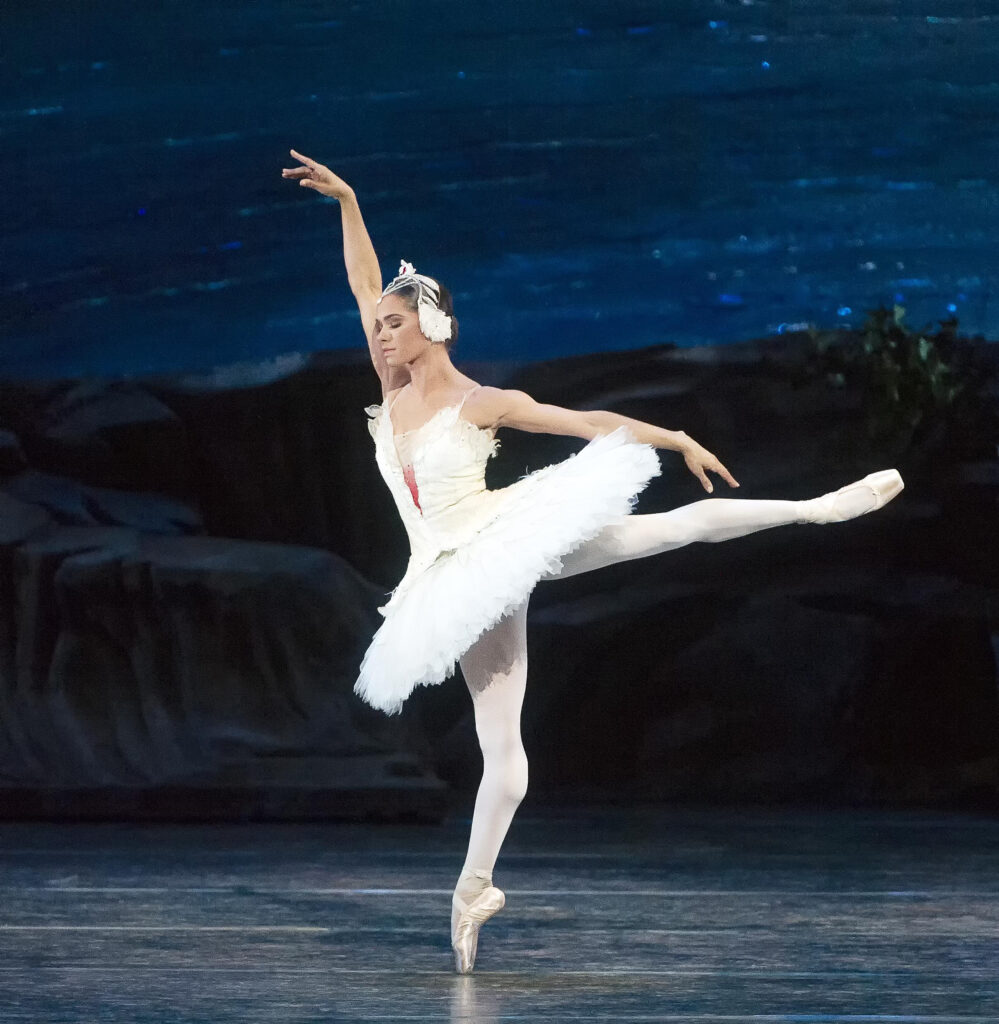
Despite the depth of its wisdom, the book finds its pulse in Schiavone’s intimate photography. While the biographical details of the dancers might be easily unearthed through social media or standard online archives, Larsen elevates the narrative by contextualizing each image. She offers a rare glimpse into the dancers’ interior landscapes, revealing exactly where they were in their lives in the moments captured on film.
Schiavone’s deep reverence for the craft reveals a great sensitivity. This respect fostered a profound trust with the dancers, who shed their stage personas to reveal their true selves before his lens. Shunning the superficiality of typical “glam shots,” he captured images that are both poetic and intimate, stripping away the costume to find the spirit beneath.
INFINITE STEPS was published by the University Press of Florida. A book launch will be held on Fri 17th April at the Capezio flagship store in New York City. Details here.

Leave a Reply to Sidner J Larson Cancel reply