Carla Escoda reviewed the opening night performance at Jersey City’s Nimbus Art Center on 15th May 2026
Nimbus Dance Company trained an inspired choreographic eye on its hometown before zooming out to a troubled chapter in American history in an ambitious program last weekend that paired riveting dancing with a sensitive mix of live and recorded music.
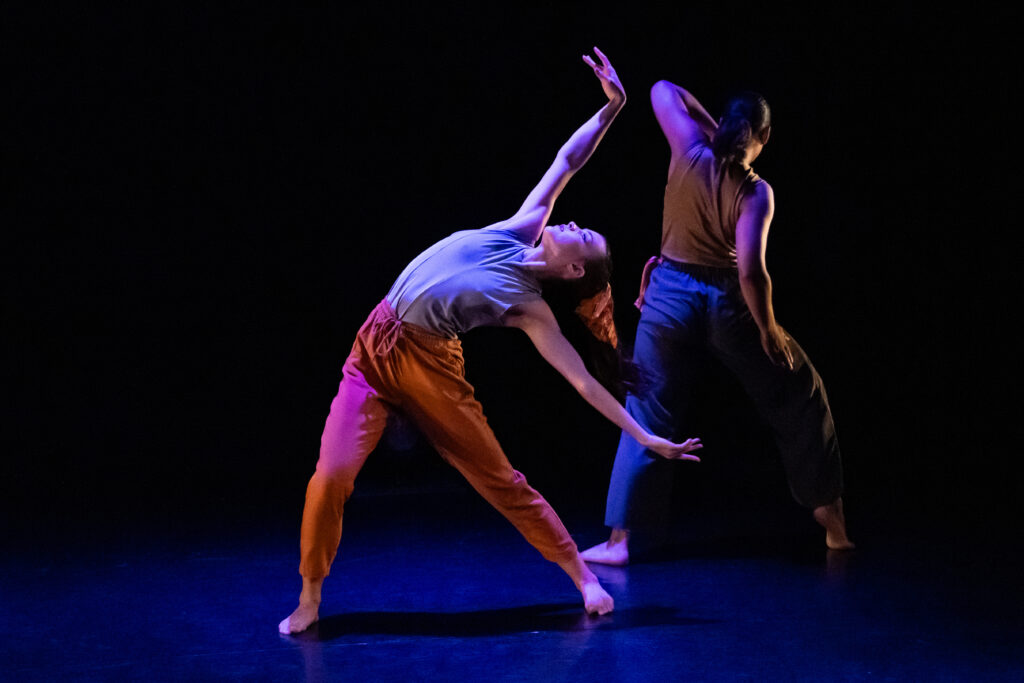
The vignettes that made up Through the Golden Door, each choreographed by a different company member, unfolded tautly against superbly edited audio interviews with activists, artists and visionaries long rooted in Jersey City. Threaded through the spoken word was a sharply curated score ranging from retro pop and Silk Road sounds to Ella Fitzgerald’s ‘Jersey Bounce.’ The dances evoked street life, generational tensions and fleeting tenderness in a muscular contemporary-ballet idiom. Among the highlights was a trio by Rosalia Saver, inspired by the words and music of Juan Cartagena – civil rights lawyer, percussionist and champion of traditional Puerto Rican music – which knotted the dancers into a tense interplay, arms slicing the air to the wail of electric guitar and Afro-Latin percussion.
Collaborative music-and-dance tapestries rarely cohere this fully. Only in its second outing since last season’s premiere, Golden Door already feels built to travel beyond Jersey City. Though the interviewees whose voices anchor the work have Jersey City in their DNA, their reflections on urban change – their anxieties and their hopes – should resonate across communities throughout America.
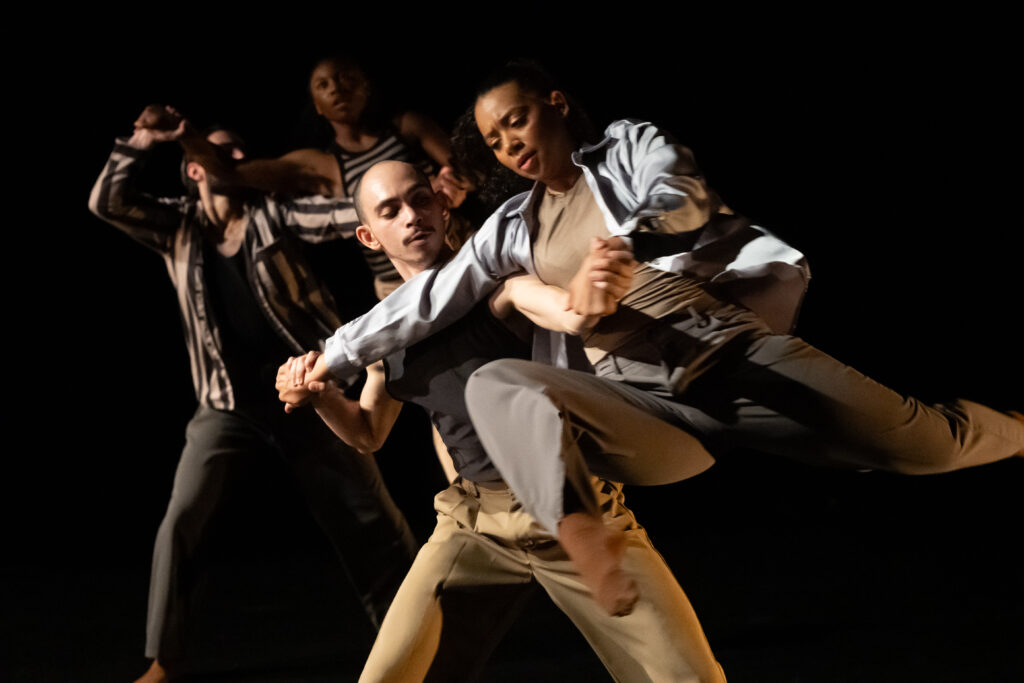
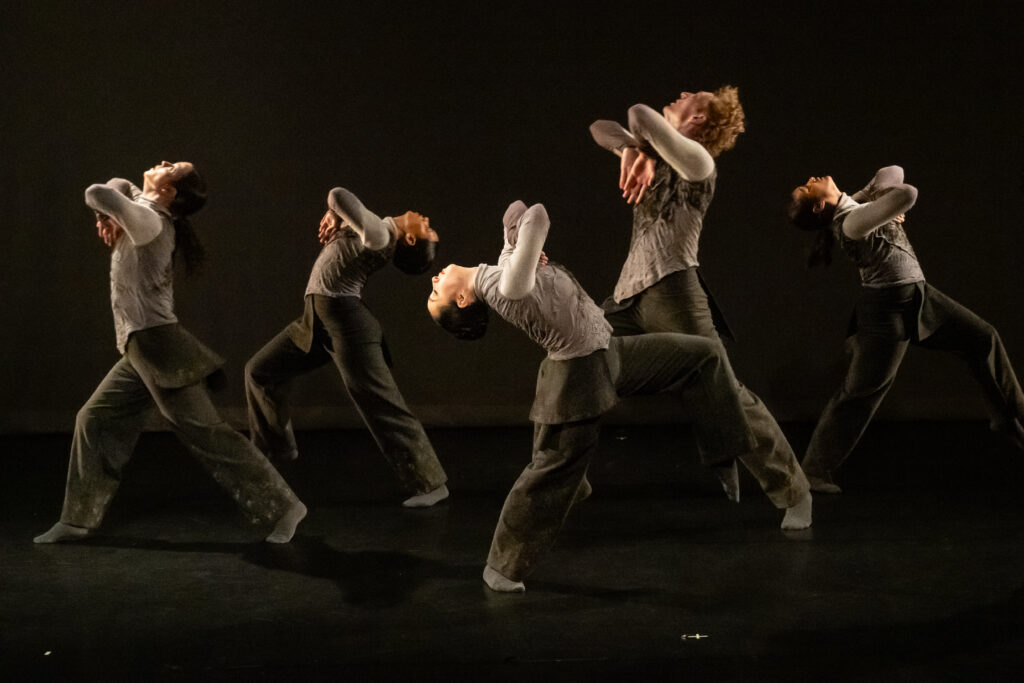
Broadly resonant, too, was the premiere of Houston Thomas’ A Land, A Promise — an imaginative, unflinching rendering of a time when immigrants to America were met with suspicion, confinement and cruelty even as demand for their labor grew. Not 2025, but the early 1900s, when half a million immigrants and refugees, mostly Asian, passed through the Angel Island Immigration Station in San Francisco Bay, many detained for months or years under the Chinese Exclusion Act and other racist policies. Their experiences diverged sharply from those of immigrants arriving through Ellis Island. Their hopes and struggles were embodied by six dancers and a throng of singers from the West Village Chorale who, joined by a cellist, surrounded the dancers on the black-box floor. Like implacable agents of authority, they intoned fragments of Emma Lazarus’ sonnet at the base of the Statue of Liberty – “Your huddled masses yearning to breathe free … / Send these, the homeless, tempest-tost to me” – chopped and layered by composer Saunder Choi into a score of thrum and clatter evoking both a storm-tossed crossing and the repetitive brutality of cannery, mill, shipyard and laundry work. The movement was clipped and geometric, piston- and gear-like in its precision, though steely outstretched arms and sternums lifted skyward marked fierce rhapsodic flashes of hope and resolve.
.
Choi also drew on poetry carved into the barracks walls by Angel Island detainees voicing despair, fury and homesickness. Prison staff could not whitewash the inscriptions fast enough; over decades, an extraordinary body of Chinese poetry survived to be preserved and translated. The dancers rose and collapsed in violent waves, arms flung like broken wings, fists yanking invisible lifelines. Choi’s bracingly unsentimental score scattered translated fragments from detainees who felt trapped and voiceless, “not able to speak or cry.” Catherine Escueta, fiercely eloquent in her movement, stood out within an excellent cast clad in severe, stylized steel-grey workwear.
The singers still seemed to be settling into Choi’s demanding score. Yet even in the confines of the black box – whose close quarters lent the work an apt claustrophobia – A Land, A Promise suggested the larger spatial possibilities of a site-responsive production. A similarly conceived work by Oakland Ballet, set to an oratorio by Huang Ruo drawn from the same source material, previewed on Angel Island itself last year against the backdrop of the barracks. On the East Coast, where audiences may be less familiar with this grim history, industrial or historical settings could lend Thomas’ work a potent visual irony. At a moment when immigration is increasingly criminalized, constitutional protections eroded and immigrants’ contributions to American life often erased, works like A Land, A Promise feel less like historical reflections than urgent acts of remembrance.
Opening the program at Nimbus Dance Company’s home base was Yoshito Sakuraba’s 2022 Avenoir, set to a haunting minimalist score layering thunderstorm sounds over music by Philip Glass and Jóhann Jóhannsson. The music’s powerful restraint was met with undulating torsos and swirling limbs that boldly claimed territory. Dancers occasionally gripped one another’s heads as if trying to control their thoughts. Escueta, Henry Steele Dillon, Brexdyn LaDieu and Audrey Lipson Yanes were riveting in a work whose title, coined in The Dictionary of Obscure Sorrows, describes the desire to watch memories approach from the future.
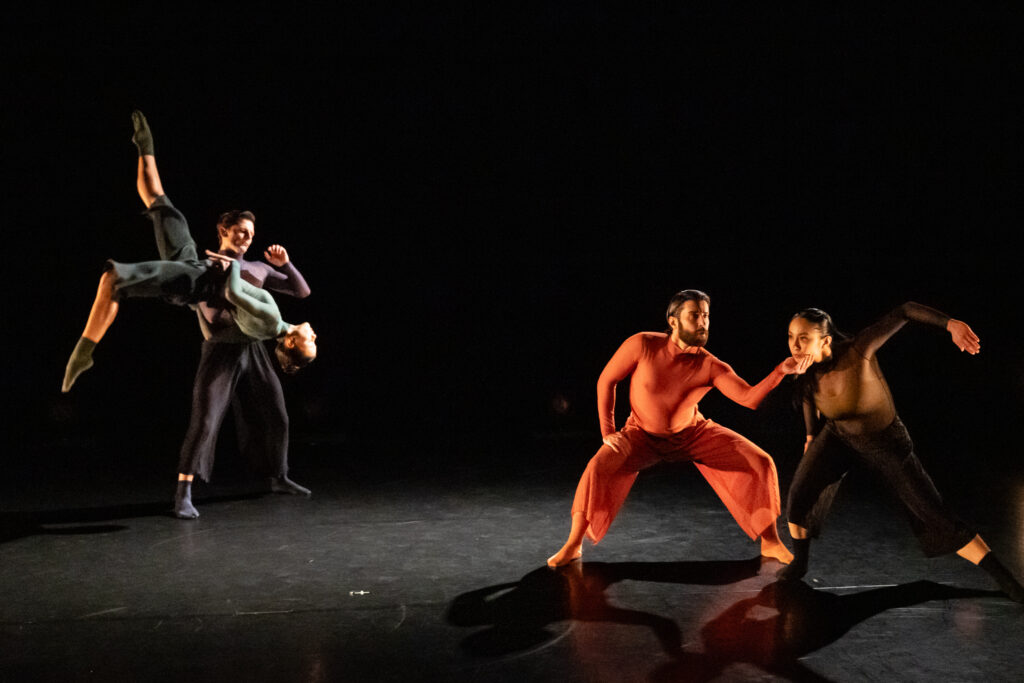
Pedro Ruiz’ Heart and Flesh (2024) rounded out the program, with the West Village Chorale providing live accompaniment in Caroline Shaw’s setting of Psalm 84. Verses evoke a sparrow and swallow searching for a nest, reflected in curving, swooping movement, spinning lifts and arms hovering like wings. Originally created for two men, the duet was ably performed here by Escueta and LeighAnn Curd. The image of two people seeking refuge in each other against a precarious world held quiet power, though the workaday choreography never fully rose to the soaring ethereality of the music.
Leave a Reply