Carla Escoda reviewed a matinee performance at the Opéra Bastille in Paris on 12th July, 2026
Nureyev’s imprint on Paris Opera Ballet was cemented in a brief, transformative reign in the 1980s – one that raised the company’s technical standards and international profile in ways more recent swerves toward the avant-garde have yet to displace. His reworkings of the story-ballet classics remain firmly lodged in the repertoire: heavily bejeweled productions, every measure teeming with quicksilver footwork and embellished jumps and turns that often register more as technical examinations than expressions of mood or character. Nureyev’s choreography can feel almost gladiatorial: only the most exceptional dancers survive it.
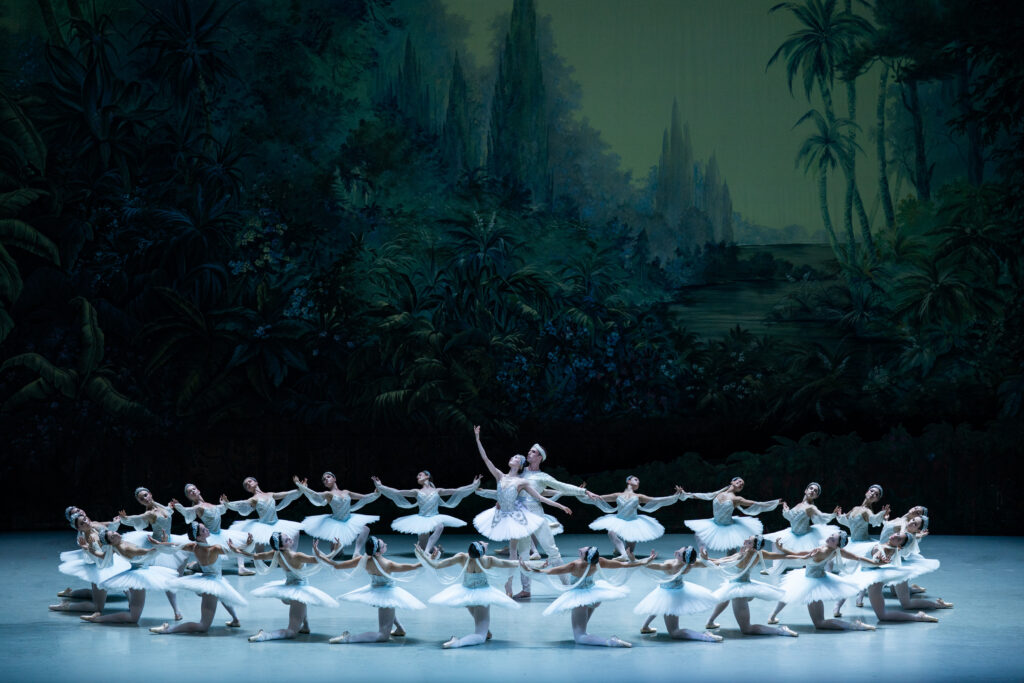
And survive it they do – splendidly – in the current run of La Bayadère. The July 12th matinee at the Opéra Bastille swept us out of the sweltering haze of la canicule into a 19th-century fantasy of an India that never was, the corps de ballet as cool and radiant as the leads. Their famously elegant style made gems of the smallest steps – never have emboîtés looked so exquisitely windswept – while the sleek attack and immaculate geometries of the eerily lit Kingdom of the Shades spoke to extraordinary discipline.
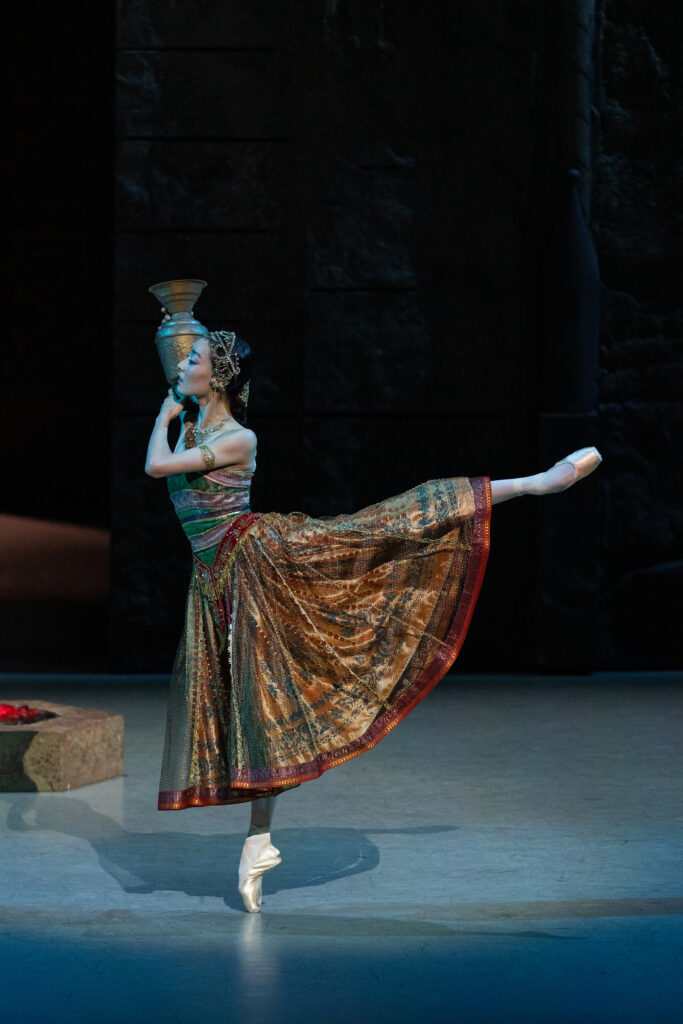
Première danseuse Hohyun Kang’s first appearance as Nikiya was almost otherworldly, her ethereal beauty framed by the wafting of long, graceful arms. Any hint of submissiveness in her downcast eyes and languid steps evaporated the moment she rejected the advances of the dissolute Grand Brahmane (Yann Chailloux), shooting him a proud, icy look and stiffening her spine.
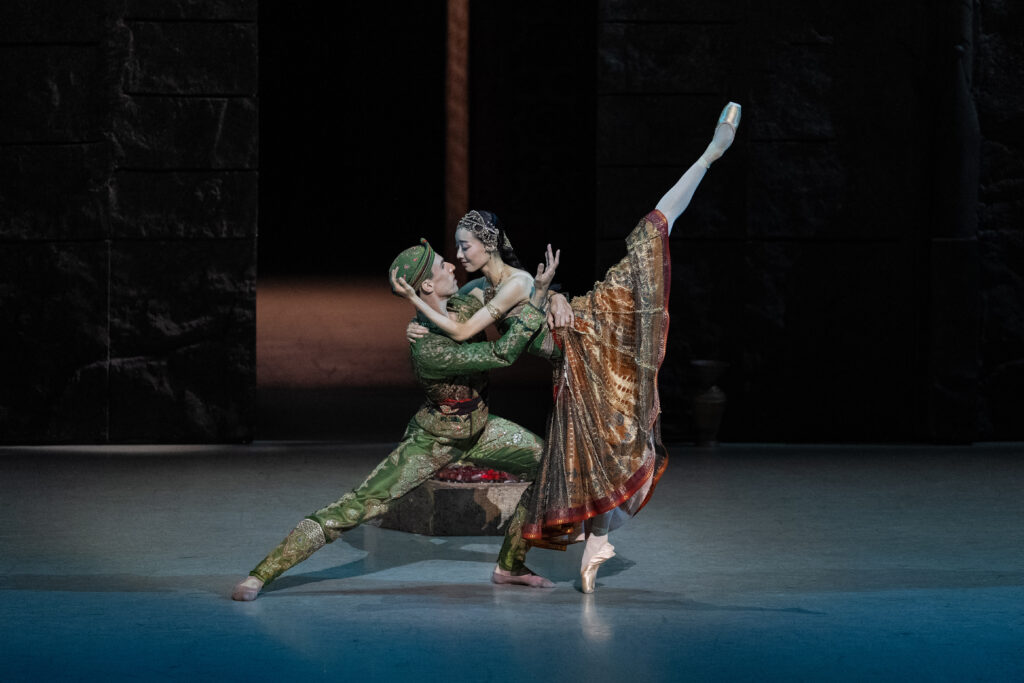
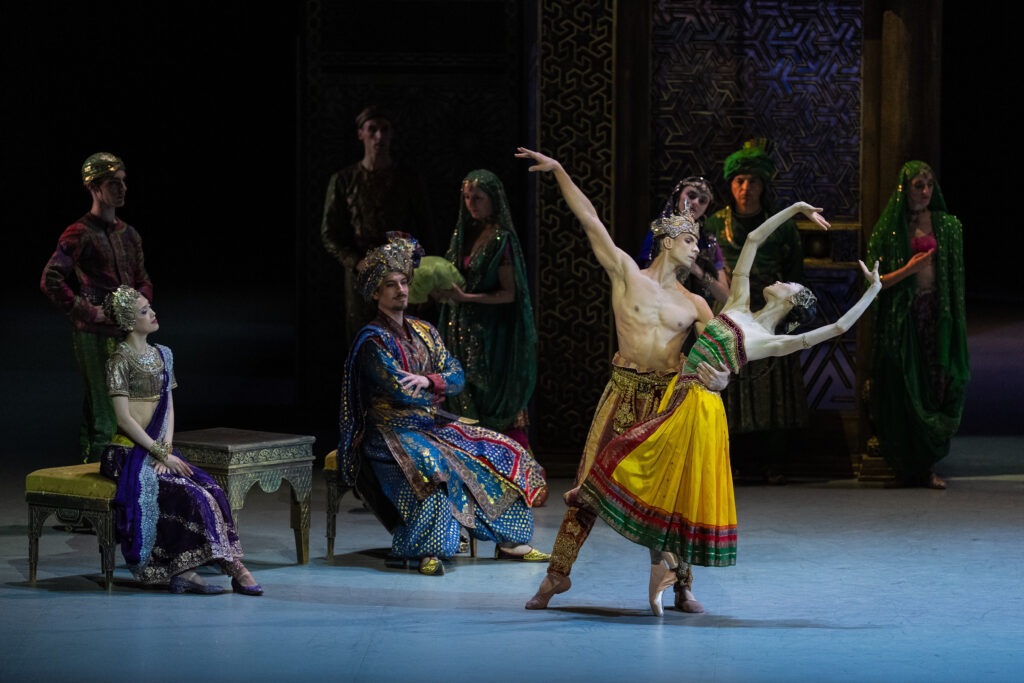
If Nikiya showed more rapture in her clandestine meeting with the noble warrior Solor than her lover did, it may be because the romantic stakes for her were higher: given their unequal social standing, he represented an escape from an oppressive life. Newly minted étoile Thomas Docquir proved an attentive partner and a clean technician, capping his final manège in the Kingdom of the Shades with explosive turning assemblés.
Nikiya’s nemesis, the princess Gamzatti, was played like a Kardashian by première danseuse Clara Mousseigne. Her annoyance on discovering that the warrior her father, the Rajah (Arthus Raveau), intended her to marry was carrying on with a lowly temple dancer turned to outrage when Nikiya refused to renounce him in exchange for jewels. Their showdown – in which they stretched out on the floor and rolled downstage before Mousseigne mimed a broad, cartoonish slap – had a more comic, stylized quality than in Makarova’s 1980 production, where genuine viciousness and terror prevail.
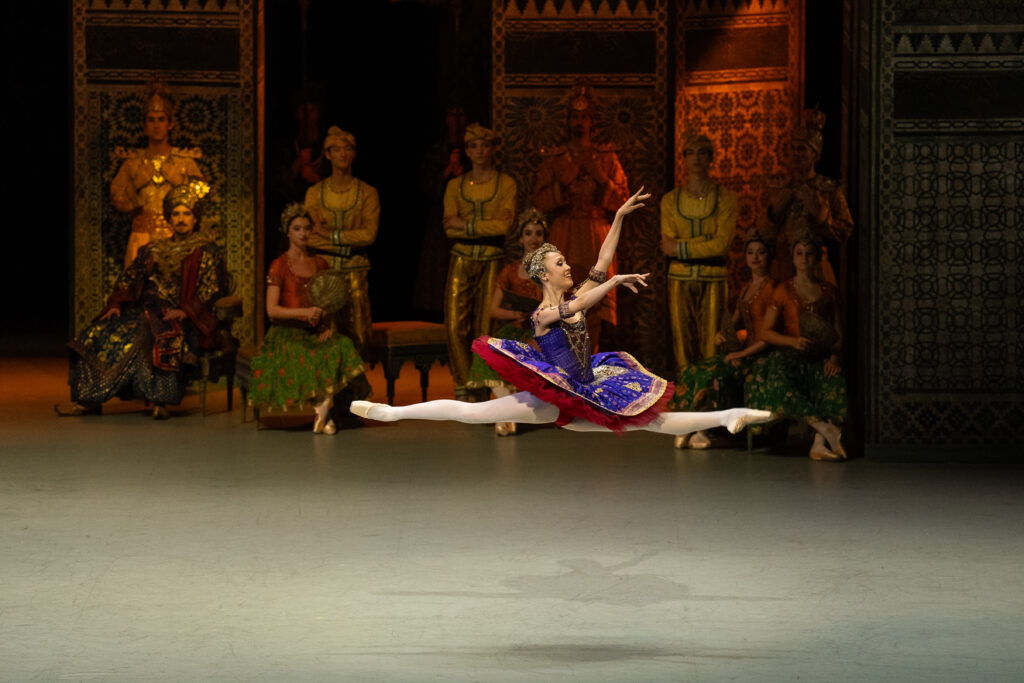
Mousseigne hurried through one of the ballet’s comic high points: the delicious passage of mime in which Gamzatti wordlessly reminds Nikiya, “I am a princess, with vast real estate in my future. You are a water-jug carrier.” She was, however, astounding in the betrothal pas de deux with Docquir, her entitled expression matched by bulletproof technique, sensationally displayed in the series of inside fouettés that preceded the workaday outside ones. Her syncopated passés, the amplitude of her turns, her immaculate landings, and the beautiful detail of her hands and wrists all spoke to supreme self-confidence.
Nikiya’s dance of death was heart-rending, Kang’s backbends heavy with sorrow, her arms beseeching the heavens. The crowds gathered for a royal betrothal drew visibly closer as Nikiya danced with the basket concealing a deadly snake, as though they were co-conspirators in Gamzatti’s plot to assassinate her. This detail, together with an earlier tense exchange between the Rajah and the Grand Brahmane, made the politics of this mythical society more explicit than in other productions, enriching the drama.
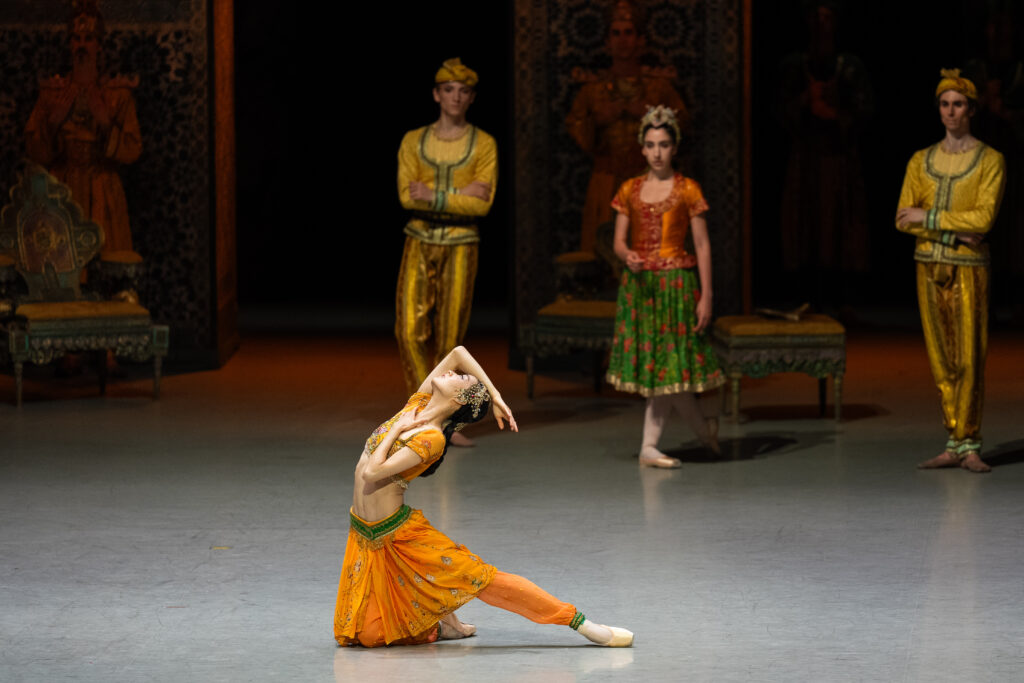
Angry at the high priest for trying to dictate his handling of the Solor-Nikiya affair, the Rajah at one point reached for his dagger before checking himself: political and religious power, each wary of the other. The Golden Idol, animated with sculptural precision by premier danseur Andrea Sarri, reinforced the sense that religion commands a physical might of its own. The implied rivalry between crown and temple lent the fairy tale a compelling political edge.
It is precisely because the storytelling is so gripping up to this point that Nureyev’s decision to reunite Solor and Nikiya in a dream lands limply. The need for justice to rain down on the murderous princess, the Rajah intent on preserving his dynasty, the self-serving Grand Brahmane, and the rest of the corrupt court was answered in the 1877 original by the destruction of the temple. That ending disappeared sometime after the Russian Revolution, but Makarova recreated it to powerful effect in her 1980 production.
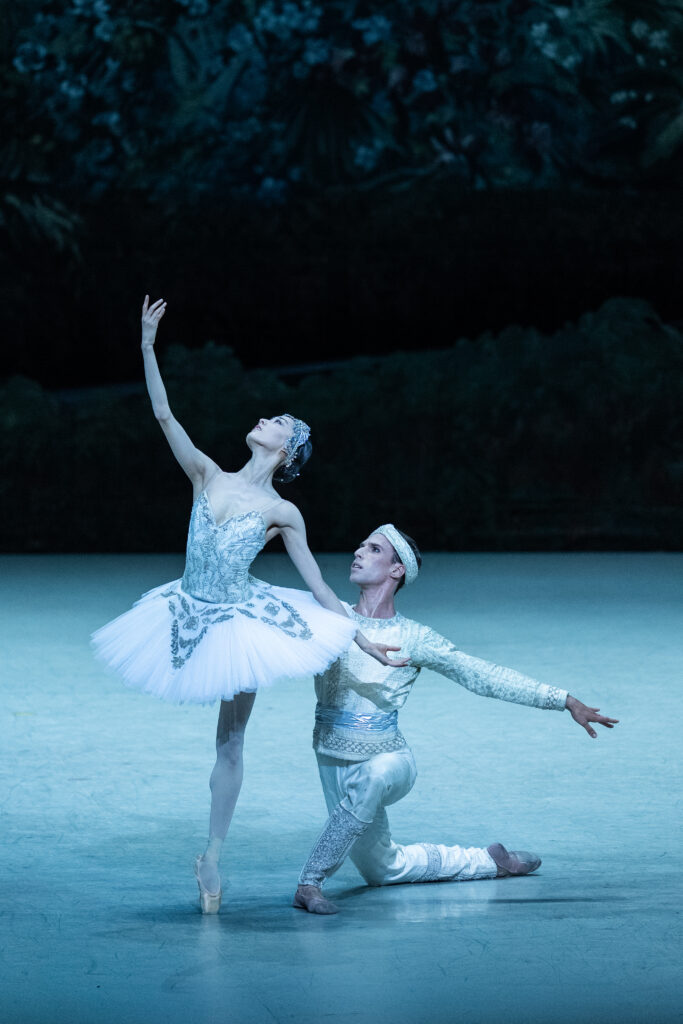
This disappointment takes nothing away from the incantatory beauty of the Kingdom of the Shades: the endless procession of ghostly bayadères down the ramp, the bristling energy of their bourrées, the thrill of 32 simultaneous balances as tutus tilted into penché arabesque before sinking gracefully to the ground. Docquir and Kang soared through their pas de deux of reconciliation – her enormous jetés en tournant landing with pillowy softness, pirouettes, blistering turns down the diagonal, and backward hops in arabesque tracing magnificent trajectories.
She came to momentary grief in the infernal scarf duet – as have legions of Nikiyas before her – when the mile-long fabric wrapped around her face. She extricated herself nobly; he ran off to jettison the thing, but not before it tangled with one of the ensemble, nearly knocking her off balance. Yet more proof that scarves as props are uncontrollable and a terrible idea.
The three Shades soloists displayed mettle. Apolline Anquetil, in particular, conquered the series of slow traveling jumps with an unfurling leg that seemed to hover before every landing – secure, still, poised for the next launch. Her technique was assured, while her manner remained beguilingly remote – a vestige of the ensemble’s austere, hypnotic entrance before the pacing gathered thrilling urgency.
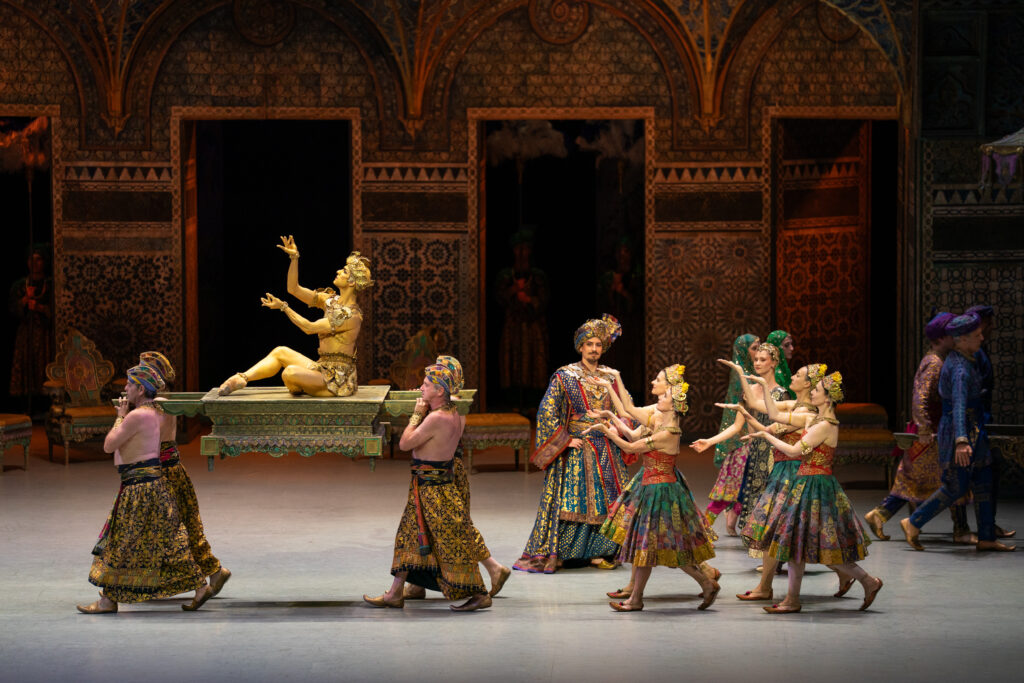
The ballet is both an intoxicating theatrical experience and a relic of imperial domination – most evident in its groveling Fakirs and Hindous, and its high-kicking “Indian dancers” whose faces disappear behind masks of feathers and boars’ tusks. Ezio Frigerio’s imposing architecture and Franca Squarciapino’s sumptuous costumes jumble Mughal, Persian, and Khmer influences with vaguely Hindu temple imagery into a pan-Asian fantasy of the Orient that Frigerio himself called a “Turquerie”: an East invented by Western artists for Western audiences. It may sidestep exoticizing India specifically. It still exoticizes Asia.
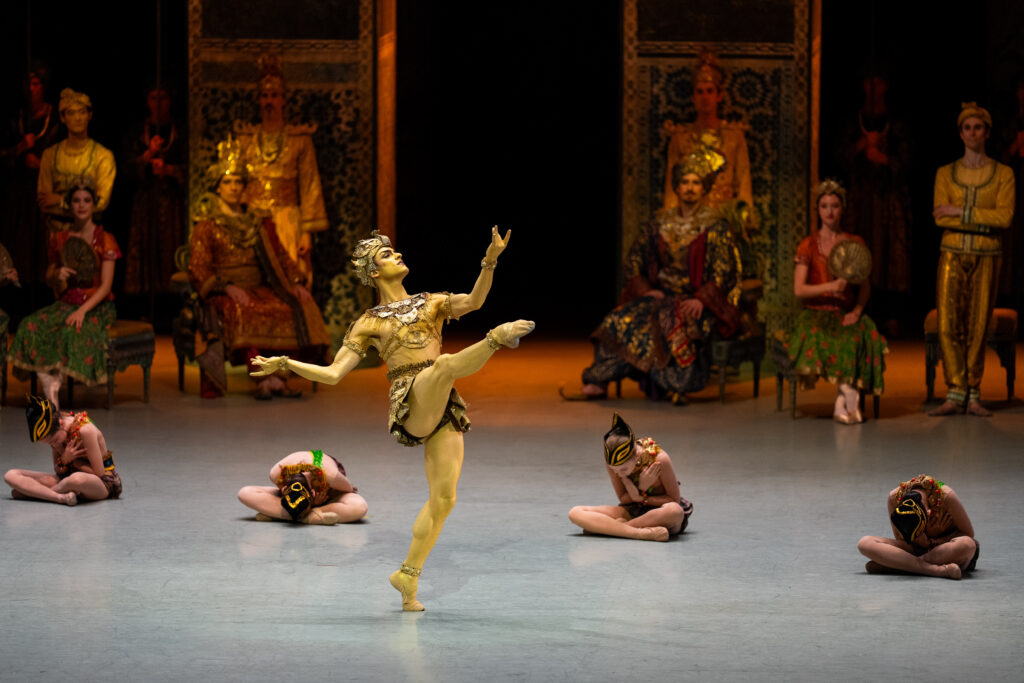
For this reason, Bayadère is among the handful of heavily Orientalist works many Western companies have recently retired. Paris Opera Ballet has held its ground (as, tellingly, have Russia’s major houses), opting instead to contextualize the work rather than abandon it. Its lavish, scholarly program traces the influences on Petipa’s 1877 original, acknowledges how it trafficked in fashionable stereotypes of India, and explains how Nureyev sought in 1992 to pay homage to the grandeur and classicism of the Russian Imperial ballet. It even quotes his conviction that a theatrical work must evolve: “Otherwise, it is dead, like a museum piece behind glass, which does not deserve to endure.”*
Yet more than thirty years after Bayadère’s premiere, the only obvious evolution is the disappearance of blackface – despite director general Alexander Neef’s constructive response to a 2021 report calling for greater diversity within the company’s ranks and broader non-Western perspectives in the creation of ballets.
Bayadère cannot be justified by historical context alone. Nureyev’s productions marked an era in which Paris Opera Ballet reinvented itself. Perhaps they can live on in a new one – where a historically significant work like Bayadère is programmed alongside works by artists from communities long excluded from ballet, telling stories rooted in their own cultures.
* Nureyev, as quoted in the program book for La Bayadère: “Un ouvrage de théâtre doit sans cesse évoluer. Sinon, il est mort, il est comme une pièce de musée sous sa vitrine, qui ne mérite pas de durer.”
Leave a Reply