Leigh Donlan was at the 8th Jan 2026 performance at the Perelman Theater in Philadelphia
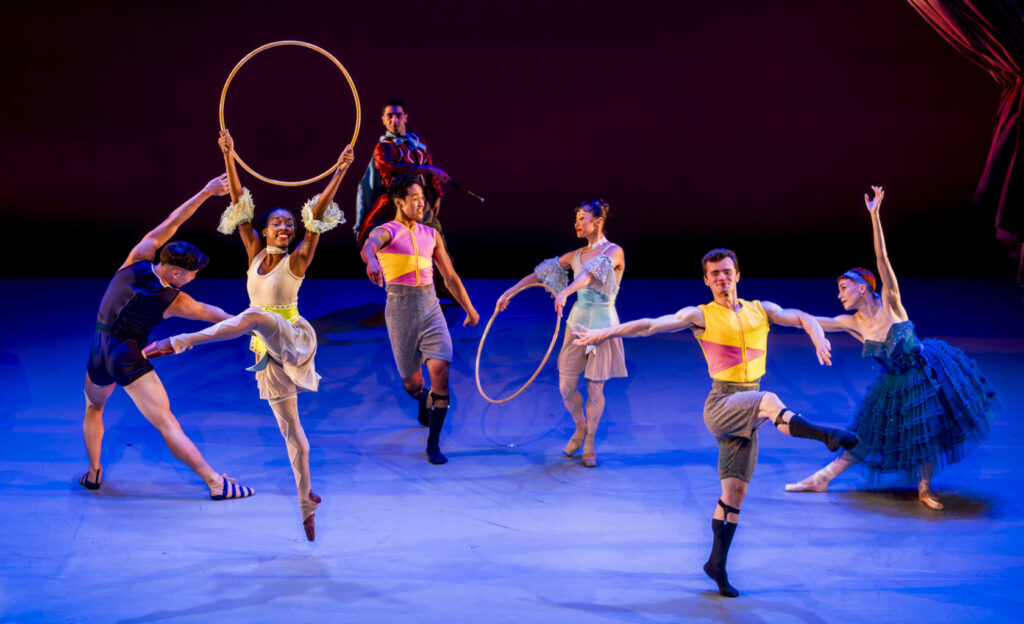
A bit of ballet history was made in Philadelphia last week. BalletX, in a brilliant collaboration with the chamber collective ensemble132 and the Philadelphia Chamber Music Society, presented the world premiere of Petrushka as reenvisioned by resident choreographer Amy Hall Garner and artistic collaborator Nancy Meckler. While many of the original structural elements were still there – the groundbreaking Igor Stravinsky score and four-tableau structure with the four original main characters – the more problematic issues of the narrative were reimagined. Gone was the racialized imagery, both the blackface of Diaghilev’s 1911 Ballets Russes production and the later blueface variant that continued to frame Petrushka as a puppet and as an angry, threatening presence. Garner and Meckler offered a refreshing overhaul of the narrative and a satisfying conclusion.
Pianist Sahun Sam Hong, the mastermind behind this rendition of the original Stravinsky score, captured its most evocative qualities while offering an intimate and painterly approach to Stravinsky’s imagery, tailored for a quintet of piano, violins, viola and cello and 16 dancers. Members of ensemble132 shared the stage with the dancers at the intimate 500-seat Perelman Theater.
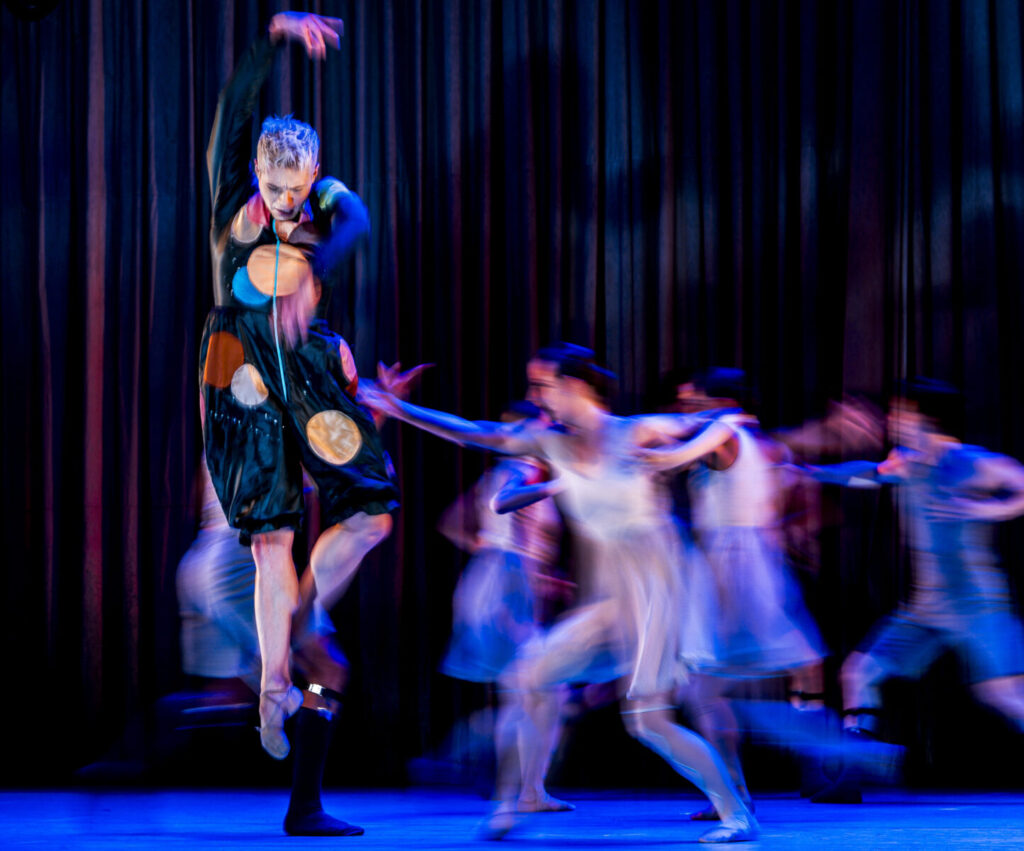
Set in Depression Era America, Petrushka opened with an ill–at–ease Pete (Peter Weil) wandering alone and cold in a barren space. A Shadow Chorus of dancers, wearing smoky tones of gray, appeared to him like a hazy dream and lured him out from under the bench where he slept. In a series of contemporary movement vignettes, they offered him glimpses of a vivid and unfamiliar world. Garner utilized the small stage imaginatively, choreographing under and on top of the bench, crafting fleeting circles and diagonals. Pete withdrew back into solitude, interrupted by the arrival of a spectacular Traveling Show.
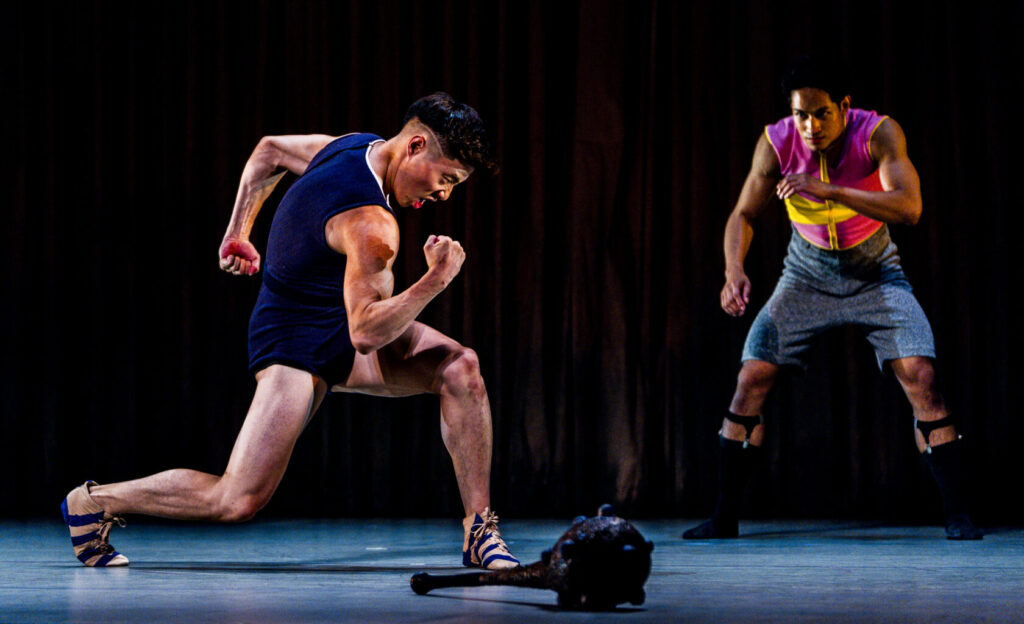
Led by a power-hungry Magician (Jonathan Montepara), the troupe featured Belle the ballerina (Lanie Jackson) and Herc the strongman (Mathis Joubert). The latter had a habit of strutting about, pausing repeatedly to admire his reflection and kiss his biceps. Joubert delivered a hilarious, larger-than-life performance throughout. The Magician conjured a variety of performances: two male acrobats doing double cartwheels, a woman juggling pins, three women on pointe executing hoop tricks, and a ribbon dancer. The intensity captivated Pete and enticed him to join their show.

The Magician conjured a Petrushka costume for Pete, which descended from the rafters on a rod-like hanger. Its appearance was heralded by the famously dissonant ‘Petrushka Chord,’ used by Stravinsky to signal the puppet’s inner conflict and a sense of looming danger. Hong has rearranged parts of the score and played with the dynamics of this strident chord that weaves in and out, so that the sensation of danger shifted compellingly to the image of a puppet’s costume, which at this point was literally looming over the stage.
In his new suit, emblazoned with bright circles, Pete’s confidence blossomed. Belle gave him a tour of their fantasy world and tried to teach him how to act like a puppet, swinging her marionette-like limbs back and forth, which he took little interest in. Tensions escalated as both Pete and Herc vied for Belle’s attention. In a departure from the classic tale, Belle appeared indifferent to Herc, who handled her like a ragdoll. Pete, witnessing the Magician’s violent treatment of Belle, realized that his newfound, costumed world wasn’t so magical after all.
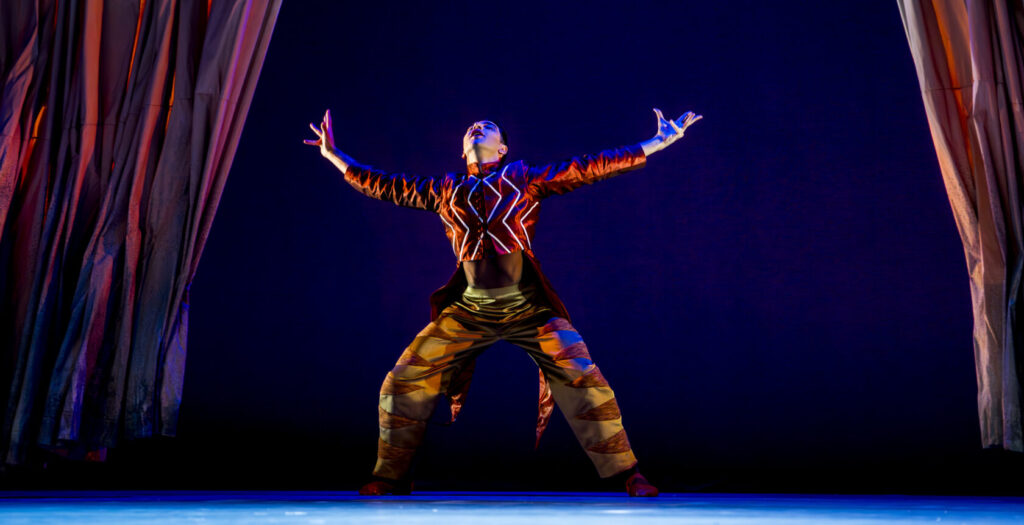
The Magician whipped up a dance contest between Pete and Herc, with Belle as the prize. Quick footwork mirrored the complicated, changing counts of the score. Herc threw Belle around while Pete handled her with care. Despite Pete’s winsome dancing, the Magician declared Herc the victor. This provoked Pete to steal the Magician’s wand.
In control of the wand yet unaware of the enormous power it wielded, Pete initially whisked everyone, the Magician included, into a frenzied dance. Once he realized the wand’s power, Pete chose not to abuse it and instead sent everyone into a deep sleep while he and Belle considered their options in the course of an emotional pas de deux. I did wonder if Pete was manipulating Belle until he shed the Petrushka costume and sent it back up into the sky. Once Belle saw his true self, she realized that it would be safe for her, too, to shed her costume. He summoned a second hanger to whisk her tutu away. With their costumes delicately suspended in the air, they danced another tender pas in their underclothing. The golden glow that suffused this scene burnished the suggestion of a transformation from puppet to human and a sense of romance.
The pair kept the wand safely out of the hands of the Magician and anyone else who might use it to amass power. In the original Petrushka, the ballerina is dominated by the Magician. But in this retelling, Belle refused the power to destroy her enemies or aggrandise herself.
The Magician and his troupe awoke, confused to see only the costumes floating in the air, like ghosts, another astute twist on the original ending in which Petrushka died and his ghost returned to haunt the tyrannical Magician.
This ingenious collaboration reaped phenomenal results: the revised score, fresh choreography and forward-thinking narrative not only breathed new life into Petrushka, but offered a version likely to stand the test of time. We can only hope for more from this high-caliber pairing of musicians and dancers. The success of Garner and Meckler’s alliance echoes that of another imaginative and high-profile teaming up of Meckler and Annabelle Lopez Ochoa on A Streetcar Named Desire for Scottish Ballet.
Members of the Philadelphia Chamber Music Society opened the evening with an innovative program of three strikingly diverse compositions: selections from ethnomusicologist Béla Bartók’s Duos for Two Violins, Paul Wiancko’s A Sanguine Clockwork and Wolfgang Amadeus Mozart’s Piano Quartet in G Minor, K 478. An altogether coherent and thought-provoking evening.
Leave a Reply